
3.0Article
The Issue
I got approached with a problem by a national seafood wholesaler. I have 600 active accounts. I have hundreds of possible leads. I cannot possibly keep on top of these accounts with just WhatsApp and emails. I need to change my technical approach.
I'm no businessman, but I can code. I've seen CRMs before, but they are not enough. These salesmen were on the road for hours. They had tasks to accomplish. They needed routing, and an easy, mobile visual interface.
The Solution
That's when I started making a simple CRUD app. I built a simple CRUD app - an accounts manager. That wasn't enough. I expanded it to contacts, tasks, deals, pipelines. But that was too much on one screen.
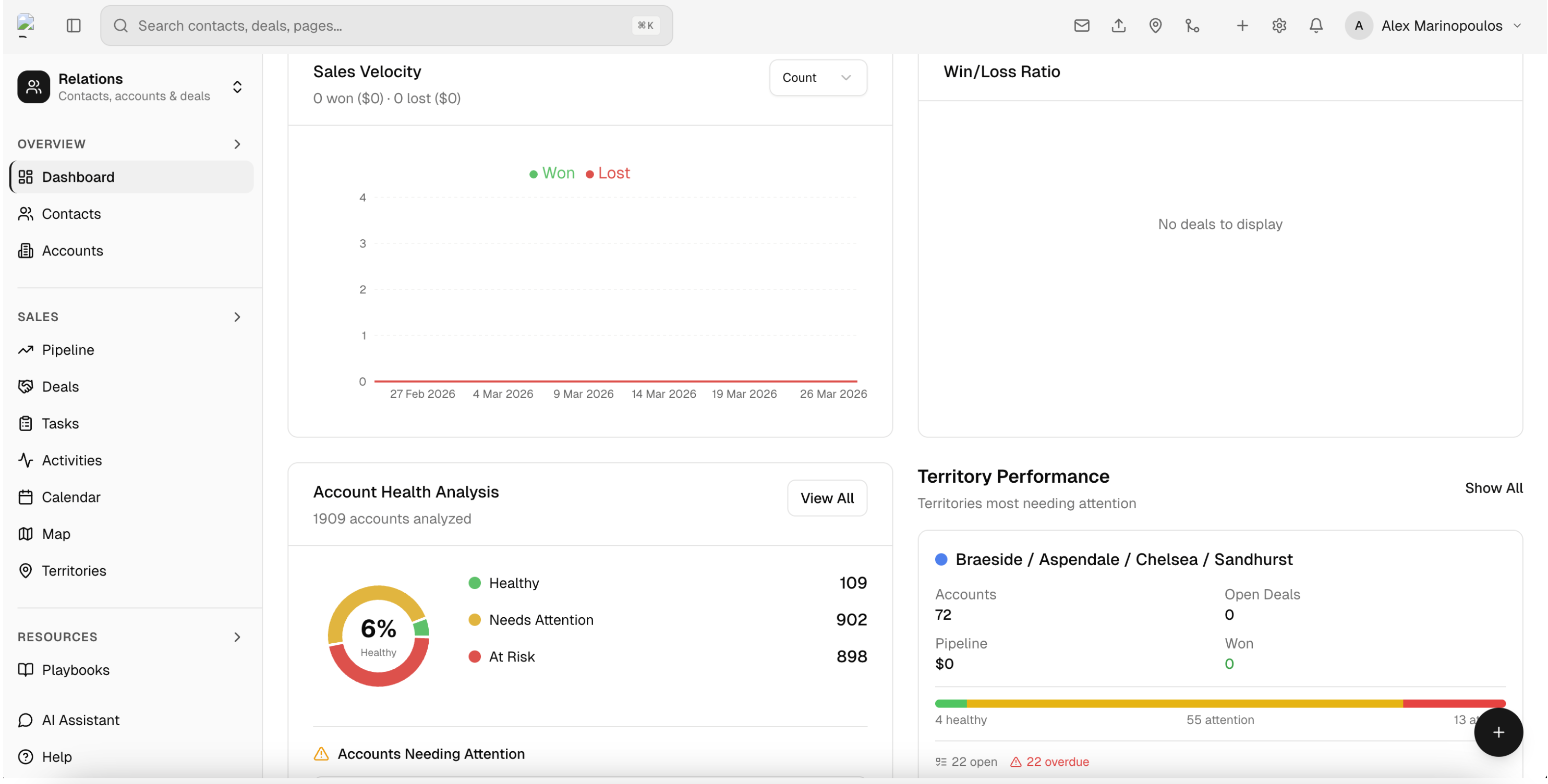
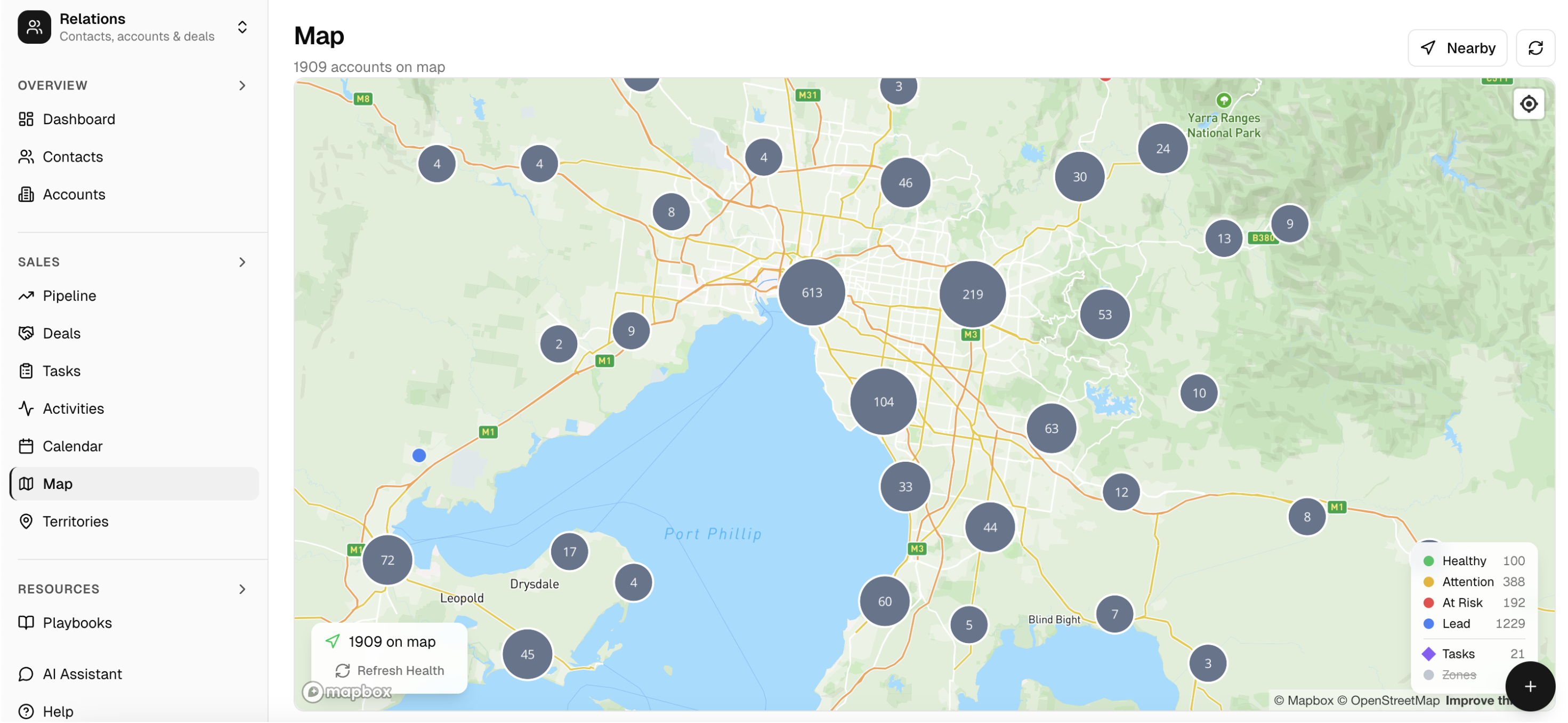
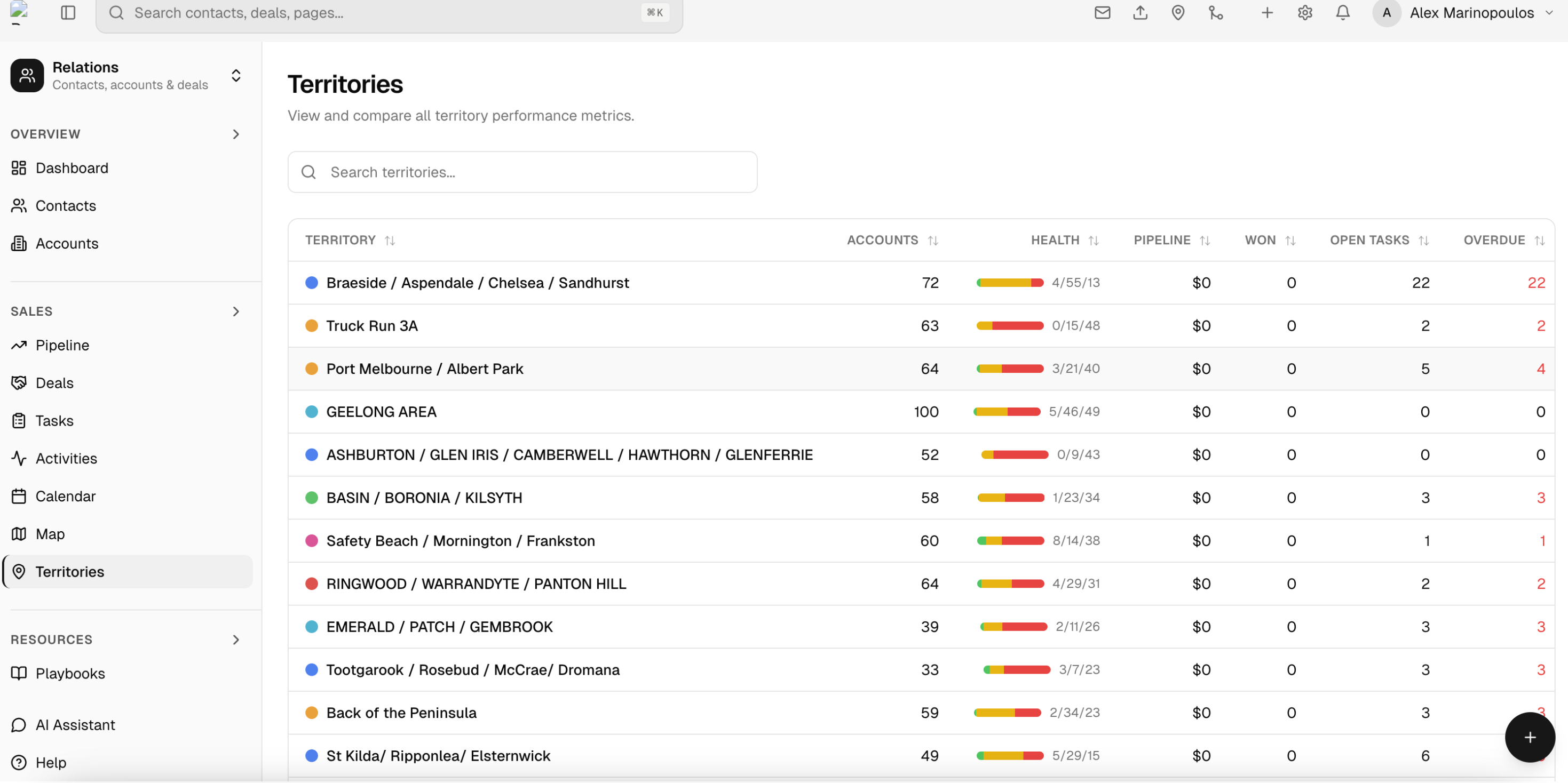 So I made visualisation easy. Networks showed relationships. Bar charts showed top performers. Line charts showed trends. Easy enough. But then an issue emerged: how do I know what to do when I am out in the Yarra Valley? I integrated a map with the system. Sales reps could now easily see what is around them. This enabled them to complete dozens of tasks per day, triple what they could do by pen and paper. Their activities were logged for management to track and top performers could be gauged. The increased competitiveness positively impacted business-customer relations.
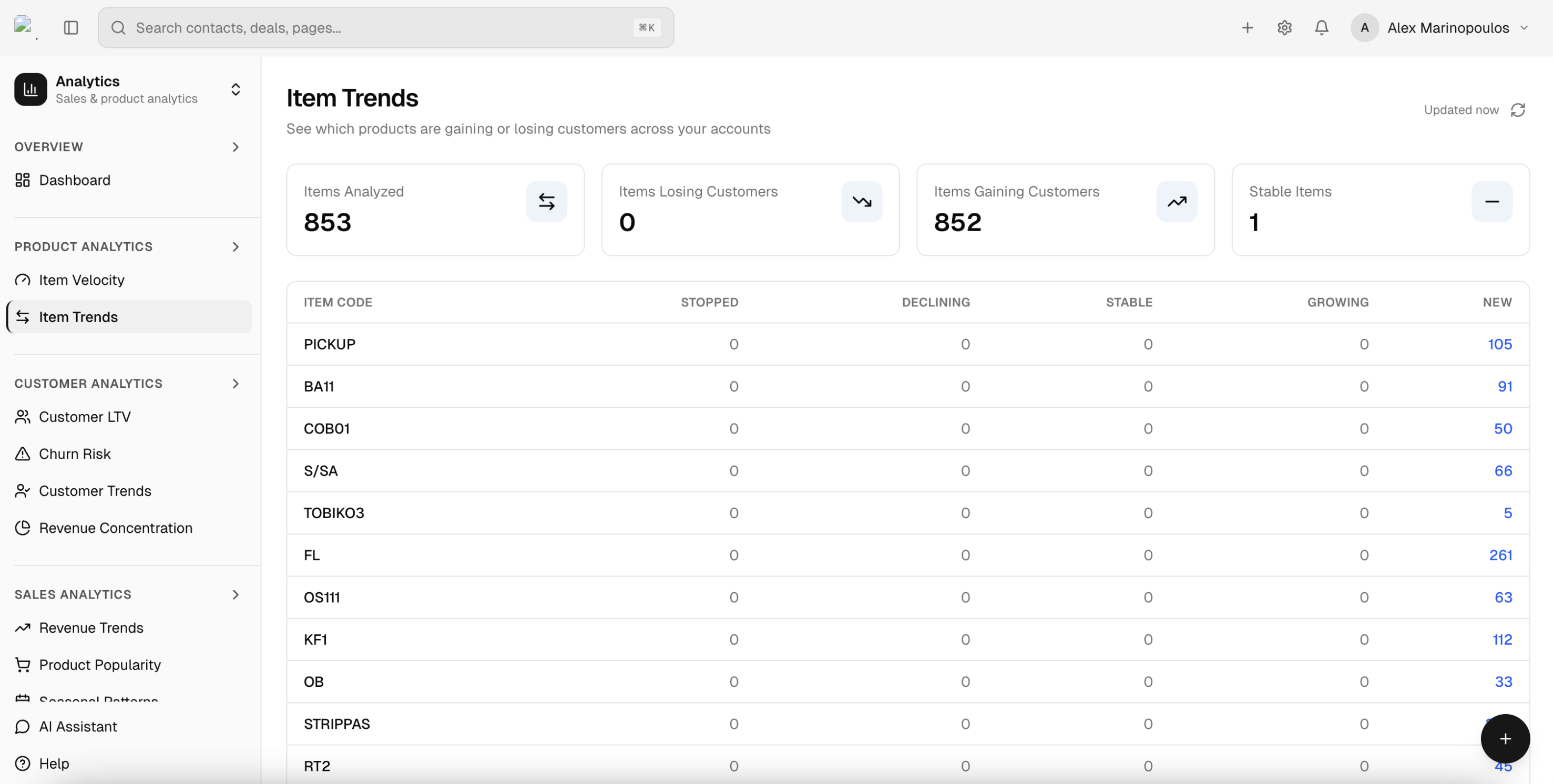
Analytics & warehousing/stockkeeping integration
Then the powerful analytics module was developed. Management could track customer sales in a period, order velocity, churn rates, and enagement.
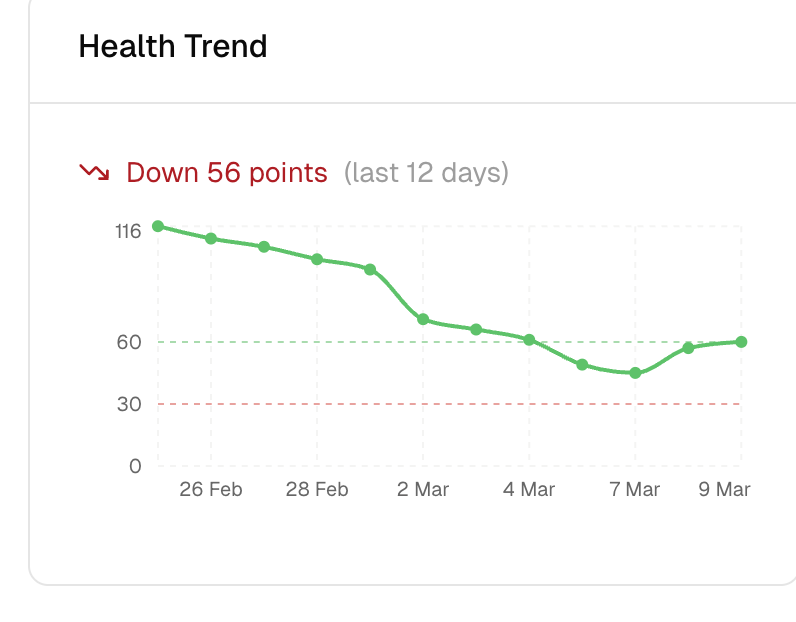
 A 'score' was then calculated for each customer to determine engagement, so sales could pinpoint issues with outreach.
This score integrated sales history, logged activities (such as visits, tasks completed, calls, etc.), and active deals.
Top customers were shown as well-performing, and at-risk customers were flagged for future visits.
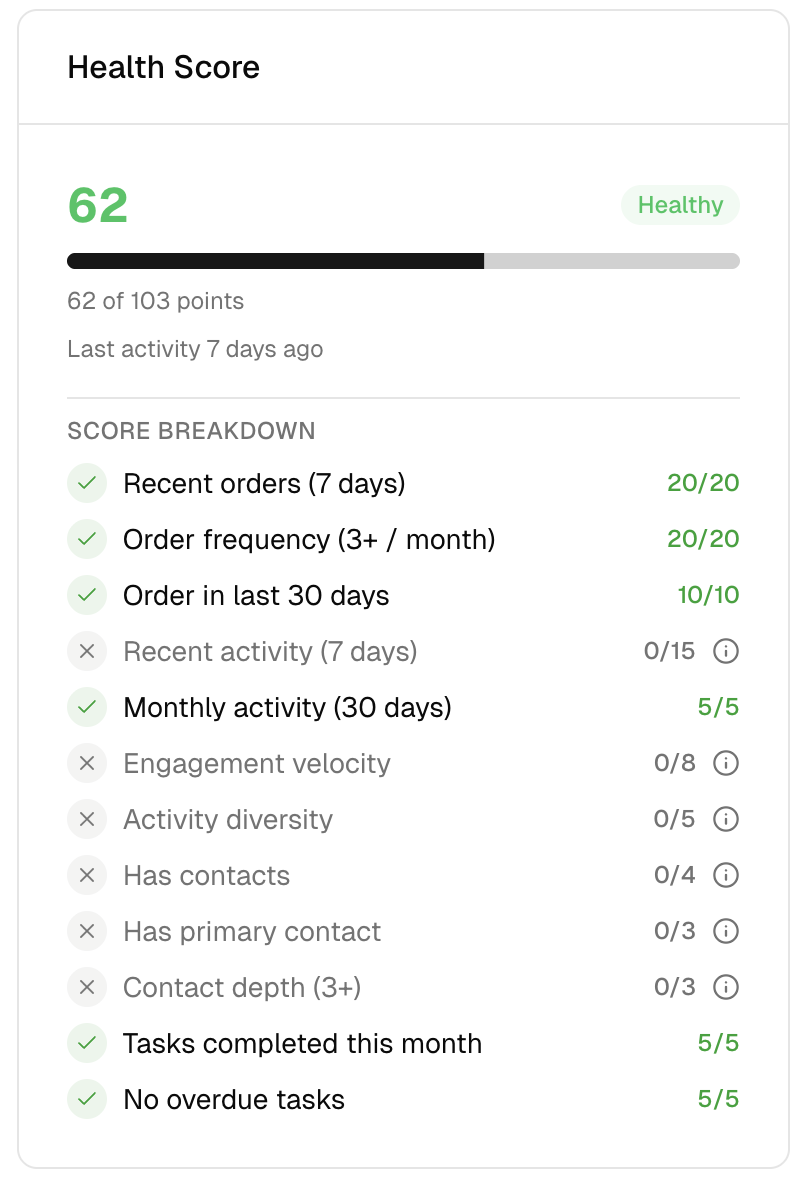
A 'score' was then calculated for each customer to determine engagement, so sales could pinpoint issues with outreach.
This score integrated sales history, logged activities (such as visits, tasks completed, calls, etc.), and active deals.
Top customers were shown as well-performing, and at-risk customers were flagged for future visits.

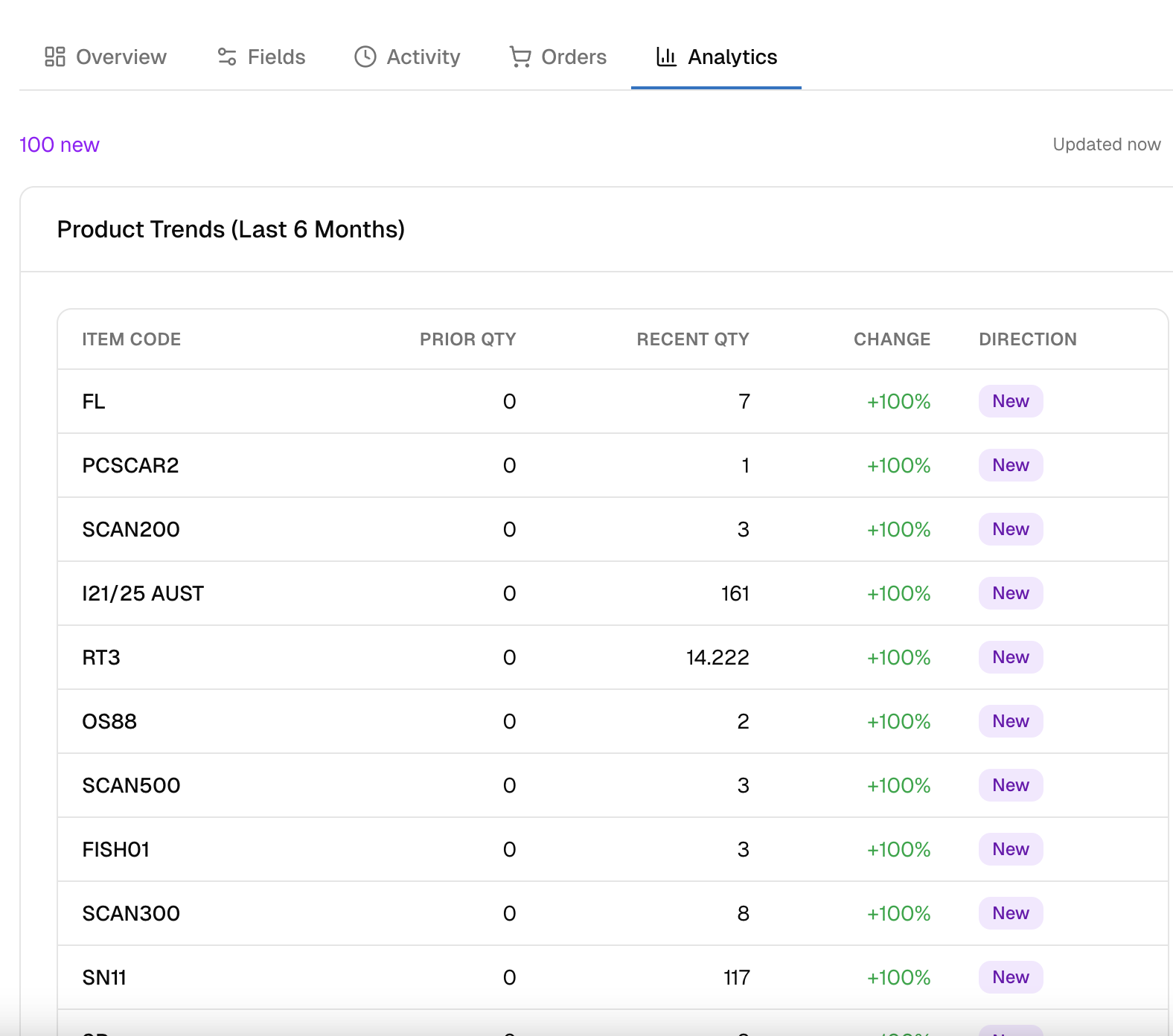
Indvidiual products are now tracked too. For example, a customer who regularly purchases flathead and then no longer buys the same quantity will be flagged just like a customer who no longer purchases in general.
 Further financial integrations were made with the business' accounting software. Monetary volume could be tracked to pick top customers. Automatically flagged issues are driven into pipelines that send notifications, emails, and WhatsApp texts to sales reps and customers. These texts both notify management and woo customers back into purchasing.
The tech stack
I don't like SQL. So I went initially with MongoDB for the database layer. I used Next.js routing logic to securely access this data through authentication layers. This presented an issue though - thousands of customers, hundreds of thousands of orders, and millions of data points slowed down the website. So, I used Redis as an intermediary. MongoDB was cached on a Redis Cloud instance and served to Vercel. The MongoDB layer still exists as a secure, stable backend behind all the curtains.
Next.js with React was the straightforward pick for me. It's easy to use, and I am proficient in it. It is also easily hosted on Vercel. I don't have to pull my hair out managing intricacies in hosting.
Conclusion
The problem was solved and now the wholesaler currently keeps track of 1,200+ active accounts with little issue. Process workflows make management easier, as key events trigger automation processes. This has resulted in a net benefit for the business. Like any project, more work still needs to be done, but it is production ready.